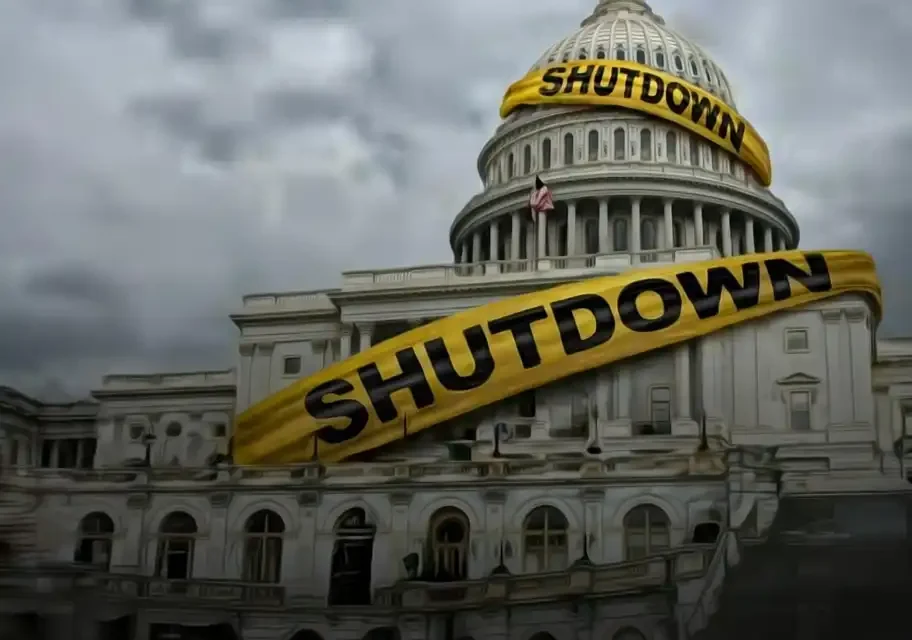
The US government shutdown partial started early Saturday morning, January 31, 2026, after Congress failed to pass appropriations legislation by midnight. This marks the second government funding crisis in less than three months, arriving just eleven weeks after the longest shutdown in American history ended on November 14, 2025. However, unlike that historic 43-day closure, this shutdown is expected to be brief, with the House of Representatives returning to vote on a funding package Monday evening that should resolve the crisis within days.
What Happened and Why the US Government Shut Down
The partial government shutdown began at 12:01 a.m. Eastern Time on January 31 when congressional funding authority lapsed. The shutdown occurred despite the Senate passing a bipartisan funding agreement on Friday evening by a vote of 71-29. The problem: the House was not in session to vote on the revised package, as lawmakers had scheduled a weeklong recess for the final week of January.
The immediate trigger traces back to a tragic event that unfolded on January 24. Customs and Border Protection agents fatally shot a Minneapolis resident named Alex Pretti, sparking outrage from Democrats and reigniting fierce debate over federal immigration enforcement practices. Senate Democrats responded by announcing they would no longer support funding for the Department of Homeland Security (DHS), which oversees Immigration and Customs Enforcement (ICE) and Customs and Border Protection (CBP). This decision threatened to tank an already-negotiated funding package that had taken weeks to finalize.
For days, negotiations stalled as Democrats and Republicans remained at an impasse. Senate Majority Leader John Thune and his Republican colleagues initially resisted the Democratic demand to separate DHS funding from the broader spending package. However, President Trump threw his support behind a compromise deal announced late on January 29. The agreement split the funding into two tracks: five appropriations bills providing full-year funding through September 30, 2026, plus a temporary two-week continuing resolution for DHS operations while lawmakers negotiate new restrictions on immigration enforcement.
The Senate swiftly moved on this revised package on January 30, passing it with strong bipartisan support. However, Speaker of the House Mike Johnson announced that the House would not return to vote on the revised agreement until Monday, February 2, resulting in the partial shutdown over the weekend. Johnson also indicated his intention to bring the bill to the House floor under “suspension of the rules”—an expedited process that requires a two-thirds majority rather than a simple majority, meaning substantial Democratic support would be needed for passage.
What Departments and Services Are Affected
Approximately 75% of federal government operations are impacted by this partial shutdown, affecting approximately 14 million Americans according to some estimates. However, the impact is significantly less severe than the 2025 shutdown because Congress has already passed funding for six of the twelve appropriations bills earlier this year and fall.
Agencies With Shutdown Furloughs
The following departments have experienced funding lapses and are implementing shutdown procedures:
- Department of Defense (except military construction and Army Corps of Engineers functions)
- Department of State
- Department of Treasury
- Department of Transportation
- Department of Health and Human Services
- Department of Labor
- Department of Education
- Department of Housing and Urban Development
- Homeland Security (temporary continuing resolution covers only two weeks)
- Executive Office of the President
- Judicial Branch
- Numerous independent agencies
Agencies Continuing Normal Operations
Many critical services remain unaffected because they received full-year funding in prior appropriations:
- Department of Veterans Affairs
- Department of Agriculture (including SNAP food assistance programs)
- Department of Justice
- Environmental Protection Agency
- FDA (Food and Drug Administration)
- NASA and National Science Foundation
- Military Construction projects
- Legislative Branch
This is crucial: Unlike the 2025 shutdown, nutrition assistance programs like SNAP remain fully operational. Federal employees at these agencies continue working normally and receiving paychecks, providing some continuity for Americans relying on federal services.
Timeline: How We Got Here
| Date | Event | Impact |
|---|---|---|
| Oct 1 – Nov 14, 2025 | Historic 43-day government shutdown | Longest shutdown in US history |
| Jan 22, 2026 | House passes all 12 appropriations bills | 341-88 vote; DHS bill passes 220-207 |
| Jan 24, 2026 | CBP agents kill Alex Pretti, Minneapolis | Democrats withdraw support for DHS funding |
| Jan 29, 2026 | Senate-White House deal reached | Split DHS from main package; 2-week CR for DHS |
| Jan 30, 2026 | Senate passes revised funding 71-29 | Awaits House approval |
| Jan 31, 2026 | Partial shutdown begins | 75% of federal operations affected |
| Feb 2, 2026 | House expected to vote | Under suspension of rules, needs 2/3 majority |
| Feb 13, 2026 | DHS two-week CR expires | Potential for second shutdown if no deal reached |
The Immigration Enforcement Issue: Why Democrats Drew the Line
The dispute at the heart of this shutdown centers on federal immigration enforcement tactics during Trump’s second term. Since January 2025, the administration has pursued an aggressive deportation agenda, with Homeland Security Advisor Stephen Miller confirming in May 2025 that the administration set daily arrest quotas of three thousand undocumented immigrants. This scale of enforcement operations has dramatically transformed federal immigration policy compared to previous administrations.
The specific catalyst came with the death of Alex Pretti in Minneapolis, shot by CBP agents on January 24. The incident triggered public fury directed at federal immigration enforcement, particularly regarding the use of aggressive tactics in interior enforcement operations rather than just at the border. Democratic lawmakers from Senate Minority Leader Chuck Schumer down to progressive House members demanded concrete reforms to ICE and CBP operations before agreeing to fund the agencies.
Senate Democrats insisted on reforms including: mandatory body cameras for all agents, bans on officers wearing masks during operations, requiring judicial warrants for arrests, and ending roving patrols that target undocumented immigrants without specific intelligence. These “guardrails” represent an effort to impose congressional oversight on what Democrats argue have become “lawless and heavy-handed” agencies.
What the Current Funding Package Includes
The Senate-passed package separates into two tracks:
Five Full-Year Appropriations Bills (through September 30, 2026):
- Defense Department
- State Department and Foreign Operations
- Treasury, Transportation, and HUD
- Labor, Health and Human Services, and Education
These five bills provide comprehensive funding for most federal operations for the remainder of fiscal year 2026. The package rejects several Trump administration budget proposals, including a 40% proposed cut to the National Institutes of Health and approximately $12 billion in reductions to the Department of Education, protecting key programs like Pell Grants, TRIO, and GEAR UP.
Department of Homeland Security (Two-Week Continuing Resolution): DHS funding has been separated into a temporary two-week measure expiring February 13, 2026. This provides time for Senate and House negotiators to hammer out specific restrictions on ICE and CBP operations before finalizing longer-term DHS appropriations. The two-week extension represents a compromise between Democrats, who wanted time for negotiations, and Republicans who initially proposed a four-to-six-week extension.
Political Complications: Will the House Pass It?
While the Senate’s 71-29 vote suggests broad bipartisan support, the House situation remains complicated. Speaker Johnson indicated he would pursue passage under “suspension of the rules,” a procedure requiring 290 of 435 votes (a two-thirds supermajority). This means Republicans cannot pass the bill alone and require substantial Democratic support.
However, House Minority Leader Hakeem Jeffries sent a clear signal on Saturday: Democrats will not provide those votes if Republicans attempt to use the suspension of the rules process. Jeffries objected to the two-week DHS continuing resolution, arguing that Senate Democrats had negotiated in good faith with the White House, not with Republicans, and that House Democrats should not be forced into a procedural trap.
This creates a dilemma for Johnson. Republicans face two options:
- Use suspension of the rules: Requires winning over about 60-80 Democrats, but Jeffries has signaled Democrats won’t participate
- Use a regular rule vote: Requires only a simple majority but could fail if fiscal conservative Republicans defect or if the rule vote itself fails
Some Republican hardliners, like Representative Anna Paulina Luna of Florida, have threatened to oppose the bill unless it includes provisions related to the SAVE Act (requiring proof of citizenship to register to vote), unrelated to government funding.
When Will the Government Reopen?
The most likely timeline shows the shutdown ending shortly after the House vote on Monday, February 2. If the House passes the package Monday evening, as expected by leadership from both parties, the bill would go to President Trump’s desk for his signature. Trump has already signaled his support for the agreement, writing on Truth Social that “the only thing that can slow our Country down is another long and damaging Government Shutdown”.
Historical precedent suggests the process could move quickly. During recent government shutdowns, once the President signs appropriations legislation, federal agencies receive funding authority immediately. Furloughed employees would then return to work, though processing back pay may take additional time.
However, a best-case scenario for the shortest duration shutdown is if the House votes Monday morning rather than Monday evening. That would theoretically avoid most of a full business day of shutdown disruption. A worst-case scenario would involve Democratic defections or Republican objections forcing the debate to continue into Tuesday or later, extending the shutdown’s duration.
What About That February 13 Deadline?
Looking ahead, Congress faces another critical deadline in just two weeks when DHS temporary funding expires. Senate Minority Leader Schumer has laid down a marker, stating that if Republicans refuse to negotiate serious ICE and CBP reforms, Senate Democrats will not vote to extend DHS funding again.
This creates a unique dynamic: Democrats are essentially using the two-week window to negotiate reforms from a position of leverage. Republicans, meanwhile, may be reluctant to agree to constraints on the Trump administration’s immigration enforcement agenda. The February 13 deadline could trigger a second shutdown if these negotiations fail to produce acceptable compromises on both sides.
Historical Context: Lessons From the 2025 Shutdown
The 43-day shutdown that ended November 14, 2025, serves as a cautionary tale about what prolonged government closures cost the economy and federal employees. That shutdown originated from Democratic demands to extend enhanced Affordable Care Act tax subsidies, which Republicans initially refused. The political standoff created a cascade of impacts: federal workers went without paychecks, air traffic control systems experienced staffing constraints, federal research programs halted, and hundreds of thousands of contractors lost income without the prospect of back pay.
The current shutdown differs in scope (partial rather than full-scale), expected duration (days rather than weeks), and trigger (immigration enforcement rather than healthcare subsidies). Yet it demonstrates the persistent challenge of Congress passing regular appropriations bills. The absence of comprehensive budget deals has become the norm rather than the exception during recent years, leaving the government vulnerable to recurring shutdown threats.
What This Means for Federal Employees and Contractors
Federal employees working for affected agencies have already received furlough notices as of Friday evening. The Office of Management and Budget directed all affected agencies to begin shutdown procedures, instructing employees to report for their “next regularly scheduled tour of duty” only to undertake orderly shutdown activities. This means most affected federal employees are not working during the shutdown and are not receiving pay.
However, those working in agencies with passed appropriations (Veterans Affairs, Agriculture, Justice, EPA, FDA, NASA, National Science Foundation, and Legislative Branch) continue their regular schedules. Federal contractors and vendors who service affected agencies may also face payment delays, as agencies cannot execute new contracts or make payments during a shutdown.
One important distinction: federal employees who are furloughed are entitled to back pay once Congress resolves the shutdown. Contractors, however, typically do not receive compensation for furlough periods, making a prolonged shutdown financially devastating for contract workers.
Is There a Government Shutdown Today?
Yes, as of February 1, 2026, the United States is experiencing a partial government shutdown. Approximately 14 million Americans employed directly or indirectly by affected federal agencies are impacted. However, the disruption is significantly less severe than the 2025 shutdown because:
- Scope is more limited – Only 6 of 12 appropriations bills remain unfunded
- Critical services continue – Veterans, agriculture, justice, and EPA operations proceed normally
- Expected duration is brief – House vote expected within 24-48 hours should resolve it
- SNAP and nutrition assistance continue – Beneficiaries see no interruption
What Happens Next: The House Vote
Speaker Johnson has committed to bringing the funding package to the House floor for a vote by 6:30 p.m. Monday, February 2. The House could theoretically pass the Senate package with minimal Democratic defections, but Democratic leadership has complicated the pathway by refusing to facilitate passage through suspension of the rules.
If the House passes the package Monday, President Trump is expected to sign it immediately, ending the partial shutdown. If procedural disputes or Republican defections delay passage, the shutdown could extend into Tuesday or beyond, but leaders from both parties expect an early-week resolution.
The real test comes February 13, when the DHS temporary funding expires and negotiations over immigration enforcement reforms will determine whether Congress can avert a second shutdown before the fiscal year ends September 30, 2026.
FAQs
- Is the government shut down right now?
Yes, a partial US government shutdown began at 12:01 a.m. ET on January 31, 2026, affecting 75% of federal operations. It’s expected to end within 3 days after the House votes Monday, February 2.
- Did the government shutdown today?
The shutdown began late Friday night, January 31 (technically today, February 1 weekend). Congress failed to pass funding before the deadline despite a 71-29 Senate vote.
- What caused the 2026 gov shutdown?
A January 24 CBP shooting of Alex Pretti in Minneapolis triggered Democratic demands for ICE/CBP reforms (body cameras, warrants). Senate Democrats blocked DHS funding, forcing a two-week CR compromise.
- How long will the US government shutdown last?
Expected ~3 days total. House vote Monday, February 2 should resolve it by Tuesday/Wednesday. Shortest recent shutdown vs 43 days in 2025.
- Is there a government shutdown affecting federal workers?
Yes, ~400K-500K federal workers furloughed without pay across Defense, State, Treasury, etc. They get back pay upon resolution. Military continues working unpaid.
- Senate Democrats government shutdown – did they cause it?
No—46/51 Senate Democrats voted YES (90%) on the 71-29 funding bill. They demanded ICE reforms, securing a two-week DHS CR compromise.
- Donald Trump government shutdown position?
Trump backed the Senate deal, warning another long shutdown would “slow our Country down.” Expected to sign House-passed bill immediately.
- Partial government shutdown vs full shutdown?
Partial: 6 departments fully funded (VA, Agriculture/SNAP, Justice/FBI, EPA/FDA, NASA). 75% affected vs 90%+ in full shutdowns.
- Senate vote today on government shutdown?
Senate voted Friday, Jan 30 (71-29 YES). House votes Monday, Feb 2. Bipartisan Senate support: 46 Democrats, 25 Republicans.
- Gov shutdown 2026 next deadline?
Feb 13: DHS 2-week CR expires. Risk of 2nd shutdown if ICE/CBP reform negotiations fail. Democrats demand body cameras, warrants.