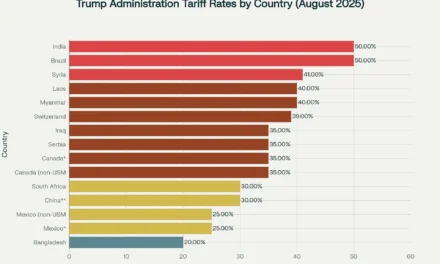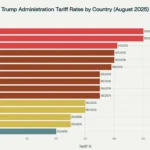
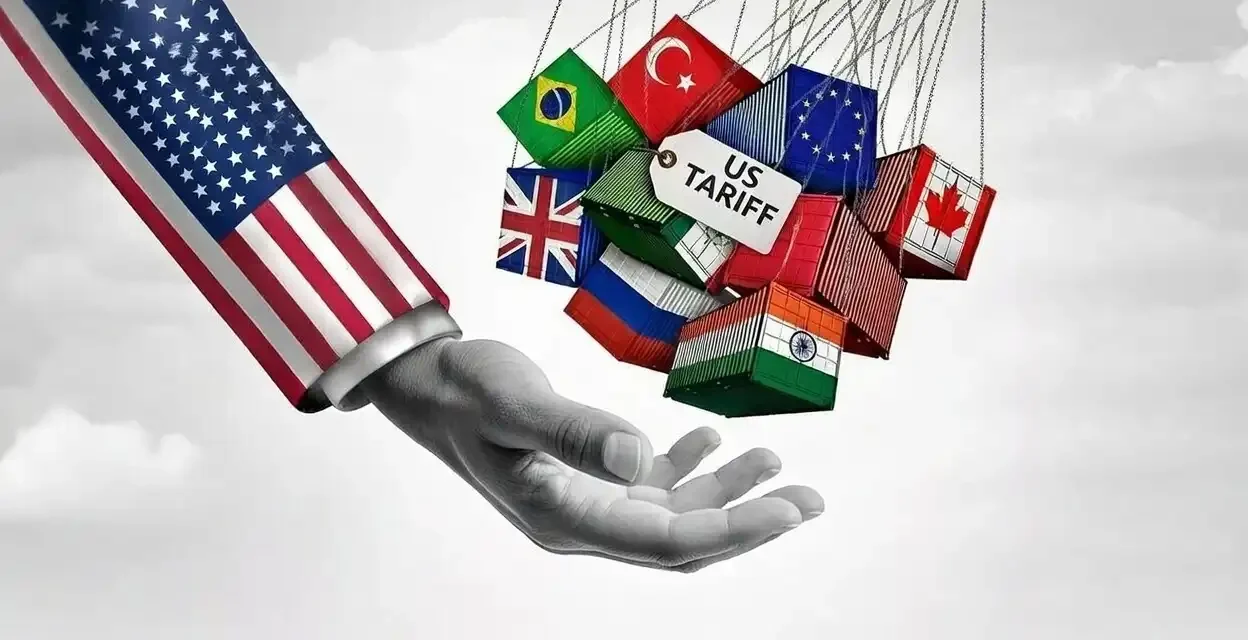
US tariffs are applied on imports from various countries under reciprocal and punitive measures announced since early 2025. These rates vary by trade partner, with adjustments from negotiations or penalties like buying Russian oil, and exemptions often apply for agreements like USMCA.
US Tariff on Key Countries (Updated)
Current US import tariff rates by major trading partners as of early 2026, focusing on reciprocal baselines (product-specific tariffs like steel or autos may add more).
| Country | Tariff Rate | Notes |
|---|---|---|
| Canada | 35% | Non-USMCA goods; 10% energy/potash |
| Mexico | 25% | Non-USMCA goods; 10% potash |
| China | 45%+ aggregate | Multiple layers including reciprocal |
| India | 18% (recently lowered) | From 50%; new deal Feb 2026 |
| European Union | 15% | Deal completed |
| Japan | 15% | Deal completed |
| South Korea | 15% | Deal completed |
| Brazil | 50% | Some ag exemptions |
| Vietnam | 20% | Lowered from 46% |
| Australia | 10% | Active |
| United Kingdom | 10% | Active |
| Indonesia | 19% | Deal completed |
| Taiwan | 20% | Deal completed |
| Algeria | 30% | – |
| South Africa | 30% | – |
Recent Updates
- India: Reduced from 50% to 18% via Feb 2, 2026 trade deal including US product purchases.
- Canada: Threats of 50% on aircraft; overall 35% holds amid tensions.
- EU nations: Greenland-related threats withdrawn Jan 21, 2026 after NATO framework.
- Base rate for most unlisted nations: 15%.
Tariffs face legal challenges, with a Supreme Court ruling possibly imminent that could alter many rates.
Several countries have negotiated bilateral trade deals or frameworks with the US, resulting in reduced or avoided high reciprocal tariffs (often capping at 10-20% instead of 30-50%+). These agreements typically involve commitments like US investments, energy purchases, or market access for US goods.
Countries with Deals
These nations have finalized or confirmed agreements lowering tariffs below the highest rates, as of early 2026. Exemptions often cover key sectors like semiconductors, pharma, or autos.
| Country/Bloc | Tariff Cap | Key Details |
|---|---|---|
| EU | 15% | Framework deal; investments in US energy/defense |
| UK | 10% | Duty-free US exports; active |
| Japan | 15% | Finalized bilateral |
| South Korea | 15% | $100B energy buys; $350B US investments |
| Indonesia | 19% | 99% US products duty-free |
| Vietnam | 15-20% | Framework; trade surged despite tariffs |
| Taiwan (Chinese Taipei) | 15% | Trade/investment agreement Jan 2026; semis exempt |
| Philippines | 19% | Zero tariffs on US goods |
| Switzerland/Liechtenstein | Reduced | Framework deal Nov 2025 |
| Pakistan | 19% | Executive order reduction |
| Cambodia | Low | Finalized |
| Malaysia | Low | Finalized |
| Thailand | Framework | Ongoing but reduced |
| Argentina | Closed | Confirmed bilateral |
| Ecuador | Closed | Confirmed |
Tariff Reductions
| Country | Original Threat | Post-Deal Rate | Reduction |
|---|---|---|---|
| Indonesia | 32% | 19% | 13 pts |
| Japan | 24% | 15% | 9 pts |
| Vietnam | 46% | 20% | 26 pts |
| Pakistan | Higher | 19% | Via deal |
| Philippines | 20% | 19% | 1 pt |
Notes
USMCA partners (Canada, Mexico) get exemptions for qualifying goods but face higher rates (25-35%) on non-compliant items. No comprehensive deals for major high-tariff nations like China, India (recently lowered but still 18%), or Brazil. More negotiations continue, with exemptions via Annex lists for specific HTSUS codes.
FAQs
1. What qualifies as a ‘trade deal’ avoiding high US tariffs?
Deals are bilateral frameworks where countries commit to US investments, energy purchases (e.g., LNG), market access, or Boeing buys, capping reciprocal tariffs at 10-20% instead of 30-50%. Examples include South Korea’s $350B pledge and Indonesia’s aircraft orders. These often exempt key sectors like pharma or semis.
2. Which bloc got the broadest deal?
The EU secured a 15% cap via a framework with $600B in US energy/defense investments, covering all 27 members. No full FTA, but avoids higher penalties.
3. Why do Canada/Mexico face tariffs despite USMCA?
USMCA exempts qualifying goods, but non-compliant imports get 25-35%. No new ‘reciprocal’ deal struck pre-deadline, amid disputes over autos/energy.
4. Has India finalized a deal?
No full deal; rate dropped to 18% recently, but was 50% due to Russia oil buys. Ongoing talks, but high exposure remains.
5. What exemptions apply universally?
Section 232 goods (steel/aluminum/autos/semiconductors/pharma ingredients) are exempt from reciprocal tariffs across deals. Country-specific annexes add more.
6. How did Taiwan avoid higher rates?
Jan 2026 trade/investment agreement caps at 15%, with pharma/aircraft/semiconductors exempt. Trade surged post-deal.
7. Are there deals with smaller nations?
Yes: Pakistan/Philippines at 19%; Ecuador/Argentina closed. Switzerland/Liechtenstein via MOU for ag/industrial reductions.
8. What’s next for no-deal countries like China/Brazil?
Ongoing negotiations; penalties possible (e.g., Russia trading adds 100%). China layers Section 301 atop reciprocal.
9. Do deals guarantee zero tariffs?
No; caps apply, with surcharges for transshipment (e.g., Vietnam 40% on China reroutes). Product-specific rates stack.
10. Where to track updates?
Use trackers like Trade Compliance Hub, Global Trade Alert, or Baker Botts for real-time lists/annexes. White House annexes detail HTSUS codes.